My unpublished master’s dissertation from 2021 in HTML and PDF formats, with up-to-date reference links.1 Results indicate strong evidence of a discernible difference in acoustic polarity using headphone reproduction.
Headphone Image Distortion, Audibility of Acoustic Polarity, and Preserving the Stereo Art
Abstract
A web-based field experiment is conducted to investigate aspects of headphone sound reproduction. The experiment is split into two parts: the first section investigates the audibility of signal polarity for three stimuli; the second section investigates listener preferences between two methods of adding crosstalk to five excerpts of commercially available stereophonic programme material. Relevant aspects of both experiments are reviewed in the literature.
Ninety-six self-selecting subjects, casual and expert assessors, used their own hardware to self-administer the listening experiment.
The results indicate strong evidence of a discernible difference of acoustic polarity using headphone reproduction for the study population, with source dependent variation. Preference results for the crosstalk experiment were source dependent, with slight evidence of preference indicated for one crosstalk method in two cases, slight evidence of preference for the alternate crosstalk method in one case, and no preference or discernible difference in two cases.
Conclusions and recommendations follow a discussion of the findings.
Typesetting Process
- Microsoft Word
docxfile from 2021 converted to Markdown using Zettlr2 - Zotero3 is the reference manager
- Exported to HTML, and PDF via \(\LaTeX\),4 using Quarto5 in Positron IDE6
- Citation style:
CSE Manual: Scientific Style and Format 9th Edition (citation-sequence)7
Thank you for your interest.
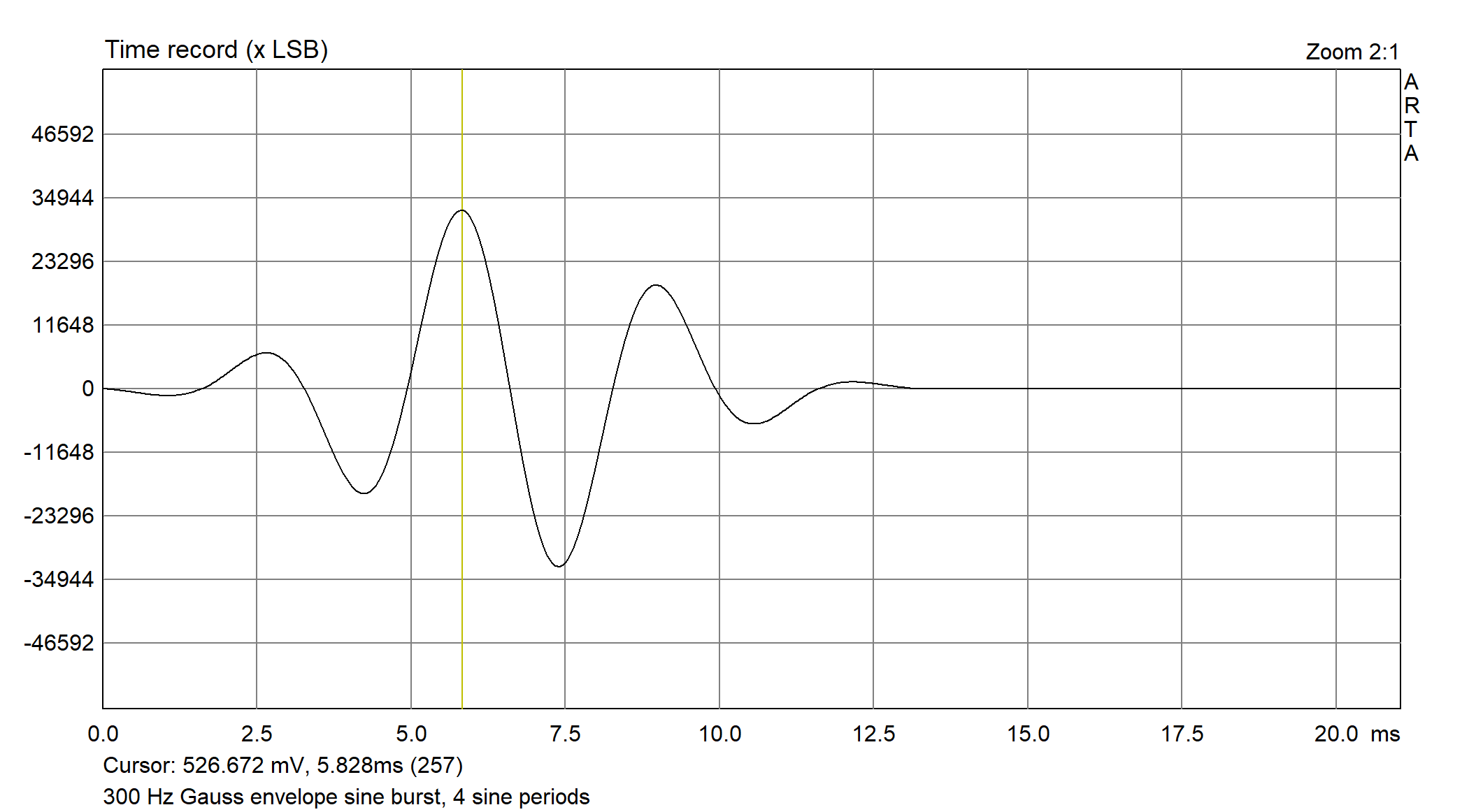
Example figure: POL3 test signal, a 300 Hz Gauss envelope tone burst, 4 sine periods. Zoom 2:1